




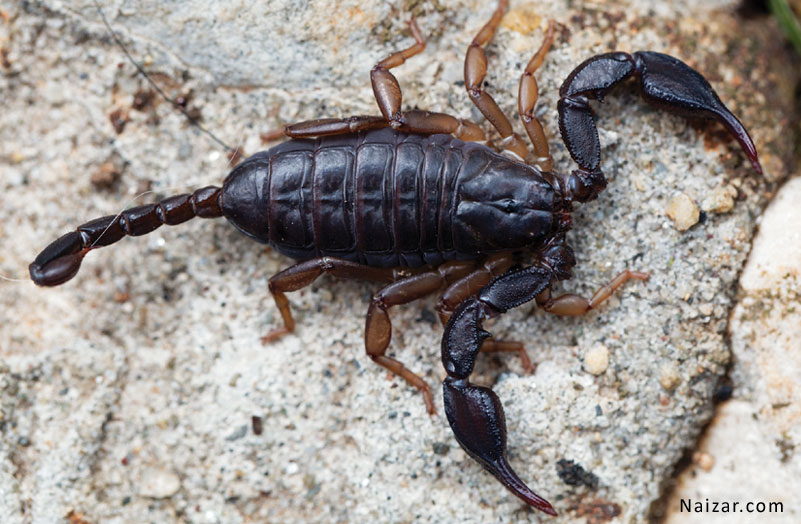
Scorpion Stinger: Hidden Metal Secrets, Strength & Survival Mechanism
What Makes the Scorpion Stinger So Powerful?
The scorpion stinger is one of nature’s most fascinating and deadly tools. While many people believe that scorpions rely only on venom, recent scientific research shows that their strength comes from something much deeper, metal reinforcement.
Scientists discovered that scorpions naturally embed metals like zinc, iron, and manganese into their claws and stingers. These metals are not randomly placed; instead, they are carefully distributed in areas that face the most stress. This makes the stinger sharper, stronger, and more durable than ordinary biological structures.
Scorpion Claws and Their Role
The scorpion claws (also called pincers) are used to grab and control prey before delivering a sting. These claws are not just simple gripping tools—they are also reinforced with metals.
Research shows that metals like zinc and iron are concentrated along the edges of the claws, especially where pressure is highest. This allows scorpions to maintain a strong grip without damaging their own body parts.
Interestingly, weaker or thinner claws often contain more zinc. This helps compensate for their lower physical strength by improving durability and grip efficiency.
Scorpion Venom and Stinger Function
The scorpion venom is injected through the stinger and is used to paralyze or kill prey. However, the effectiveness of the venom depends heavily on the strength of the stinger itself.
The tip of the stinger is the most critical part, and this is where metals like zinc are highly concentrated. Just below the tip, other elements like manganese appear, forming a layered structure that improves both sharpness and flexibility.
This combination allows the stinger to penetrate effectively without breaking, making it a highly efficient biological weapon.
Scorpion Metals Zinc Iron
The presence of scorpion metals zinc iron is one of the most surprising discoveries in modern biology. These metals are integrated into the scorpion’s outer structure (called chitin), transforming it into a material that behaves more like ceramic than simple biological tissue.
Each metal plays a specific role:
- Zinc improves durability and resistance to wear
- Iron strengthens claw edges
- Manganese adds flexibility and structural balance
This natural engineering allows scorpions to survive harsh environments and repeated use of their weapons.
Scorpion Stinger Strength
The scorpion stinger strength comes from both its structure and material composition. Metals are mainly concentrated at the tip, where maximum force is applied.
Interestingly, scientists found that metals stop halfway along the stinger, creating a boundary between hard and softer material. This design helps absorb stress and reduces the risk of complete breakage.
Such precision in design shows how evolution has optimized the stinger for both power and durability.
Scorpion Hunting Mechanism
The scorpion hunting mechanism depends on a balance between claws and stinger. Some species rely more on strong claws to crush prey, while others depend on a powerful sting.
Research reveals an evolutionary trade-off: if a scorpion invests more metal in its claws, it uses less in the stinger, and vice versa. This balance depends on how each species hunts and survives.
This adaptability makes scorpions highly efficient predators in different environments.
Scorpion TV Series (Pop Culture Reference)
Apart from biology, the word “scorpion” is also popular in entertainment, such as the TV show Scorpion. However, unlike real scorpions, the series focuses on human intelligence and problem-solving rather than natural survival mechanisms.
Still, the name reflects the idea of precision, power, and strategic thinking, qualities that real scorpions naturally possess.
Conclusion
The scorpion stinger is far more advanced than it appears. From metal reinforcement to precise structural design, it represents one of nature’s most efficient weapons. Combined with strong claws, potent venom, and a smart hunting mechanism, scorpions are true examples of natural engineering.
Understanding how metals like zinc and iron enhance their strength not only reveals the secrets of their survival but also inspires modern science and material engineering. Nature, once again, proves to be the ultimate innovator.
